← All posts
September 7, 2026
Website, Web App, or Mobile App? What Your Business Actually Needs
Everyone who calls asking for "an app" means something different by it, and building the wrong one wastes money on something nobody ends up using. Here's how to tell whether your business actually needs a website, a web app, or a native mobile app.
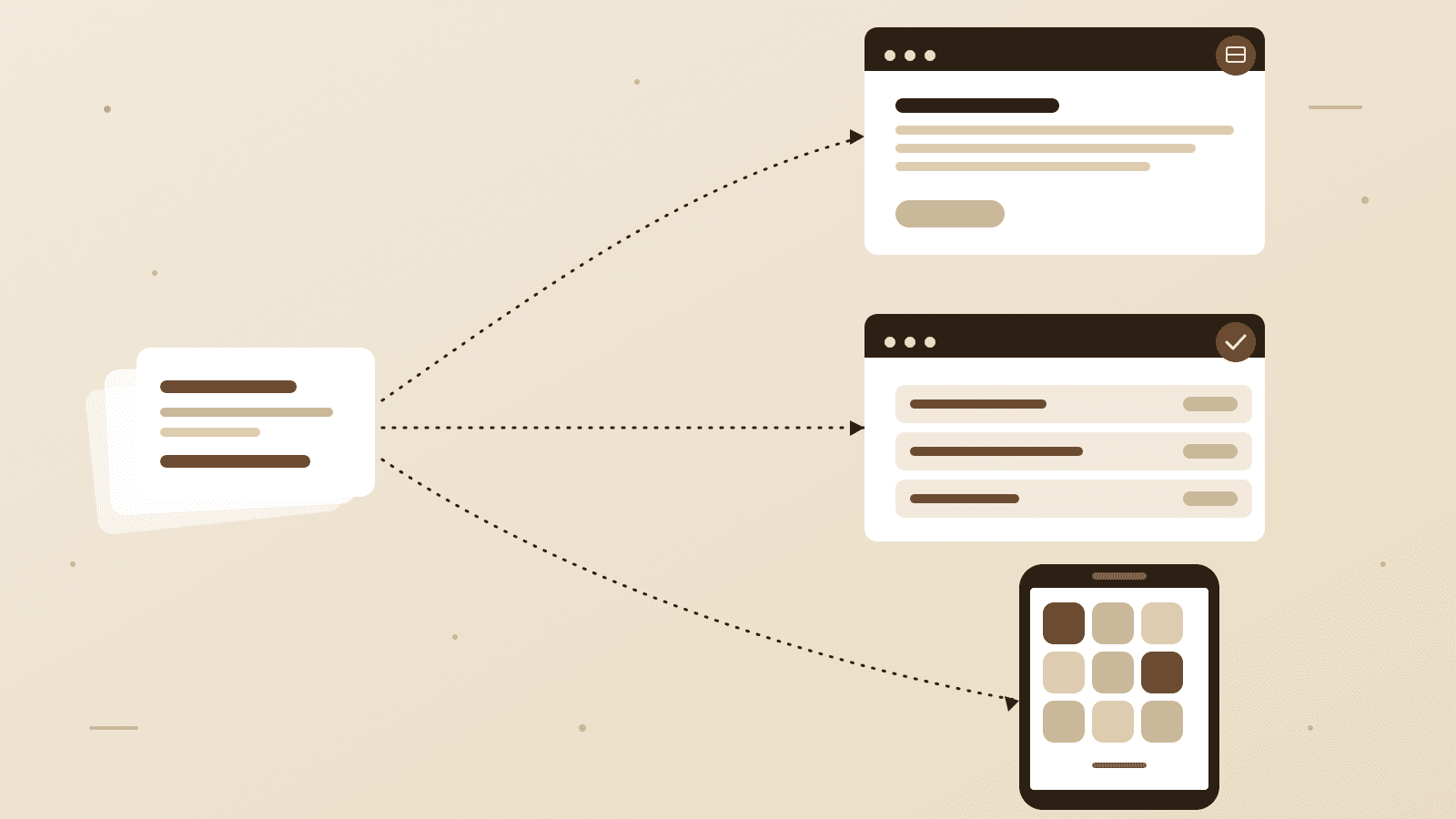
Somebody wants "an app" for their business. That's usually the first sentence of the call, and it's usually wrong — not because they're confused, but because "app" has become the default word for "something on my phone that helps my business," and it covers three very different things: a website, a web app, and a native mobile app. Building the wrong one doesn't just waste money. It ships something that never gets used the way it was supposed to.
Here's what each one actually is, and how to tell which one a given business needs.
A website is a set of pages meant to be read: your hours, your services, your prices, how to reach you, maybe a blog. Most businesses that ask for "an app" actually need this. It's the cheapest to build, the cheapest to maintain, works on every device without installing anything, and shows up in search results — which a mobile app, sitting inside an app store, does not. If the goal is "people should find us and know what we do," a website already does the job, and doing more than that is wasted spend.
A web app is a website that does something rather than just display something: a booking calendar, a customer portal, an ordering system, a dashboard someone logs into. It runs in a browser exactly like a website does, so it doesn't need an app store, doesn't need to be downloaded, and updates instantly for every user the moment you ship a change. Most of what people picture when they imagine "an app for my business" — customers logging in, placing orders, checking status — is actually a web app, not a native mobile app, and can be built and maintained for a fraction of the cost.
A native mobile app is software installed from the App Store or Google Play, running directly on the phone's operating system. It's the right call in a narrower set of cases than most people assume: you need something that works with no internet connection at all, you need deep access to hardware a browser can't reach — background location, Bluetooth devices, the camera in ways a browser can't do cleanly — or push notifications are core to how the product works, not a nice-to-have. Outside of those cases, a native app mostly adds cost: app store review, two separate codebases for iOS and Android (or a slower cross-platform compromise), mandatory updates users have to download, and a store listing you now have to maintain forever.
So here's how to actually decide, in order.
1. Start by asking what the thing needs to do, not what it should be called. "Customers should be able to see our menu" is a website. "Customers should be able to place an order and track it" is a web app. "Delivery drivers need turn-by-turn navigation that works with the screen off and no signal" is a mobile app. Write down the actual behavior first; the category falls out of that, not the other way around.
2. Check whether a browser can already do it. Modern browsers handle camera access, location, notifications, offline caching, and "add to home screen" behavior that looks and feels like an app icon. A huge share of requests that start as "we need a mobile app" are fully solvable as a web app once someone checks what a browser can actually do in 2026, which is a lot more than it could five years ago.
3. Weigh the store tax against the reach. A native app has to be found, downloaded, and kept updated, which is a real barrier for a first-time customer who just wants your hours. A website or web app is one link away, works instantly, and doesn't ask anyone to give up storage space to try you out.
4. Only build native when the reason is technical, not aesthetic. "It'll feel more professional" is not a reason to double your build and maintenance cost. "It needs to work underground with no signal" is.
Most small businesses that call us asking for "an app" leave that first conversation with a plan for a website or a web app instead, and a lower bill than they expected. When a mobile app really is the right call — and sometimes it is — we'll say so plainly, walk through exactly why the browser version won't cut it, and build it ourselves rather than handing you off to someone else's team halfway through. No account manager translating between you and the developer, no ticket queue: you talk to the person actually writing the code, from the first call to the last deploy.
Start a project