← All posts
September 16, 2026
How Much Should a Website Actually Cost?
Ask five developers what a website costs and you'll get five wildly different numbers, and none of them are lying. Here's what actually drives the price, and how to tell if a quote makes sense.
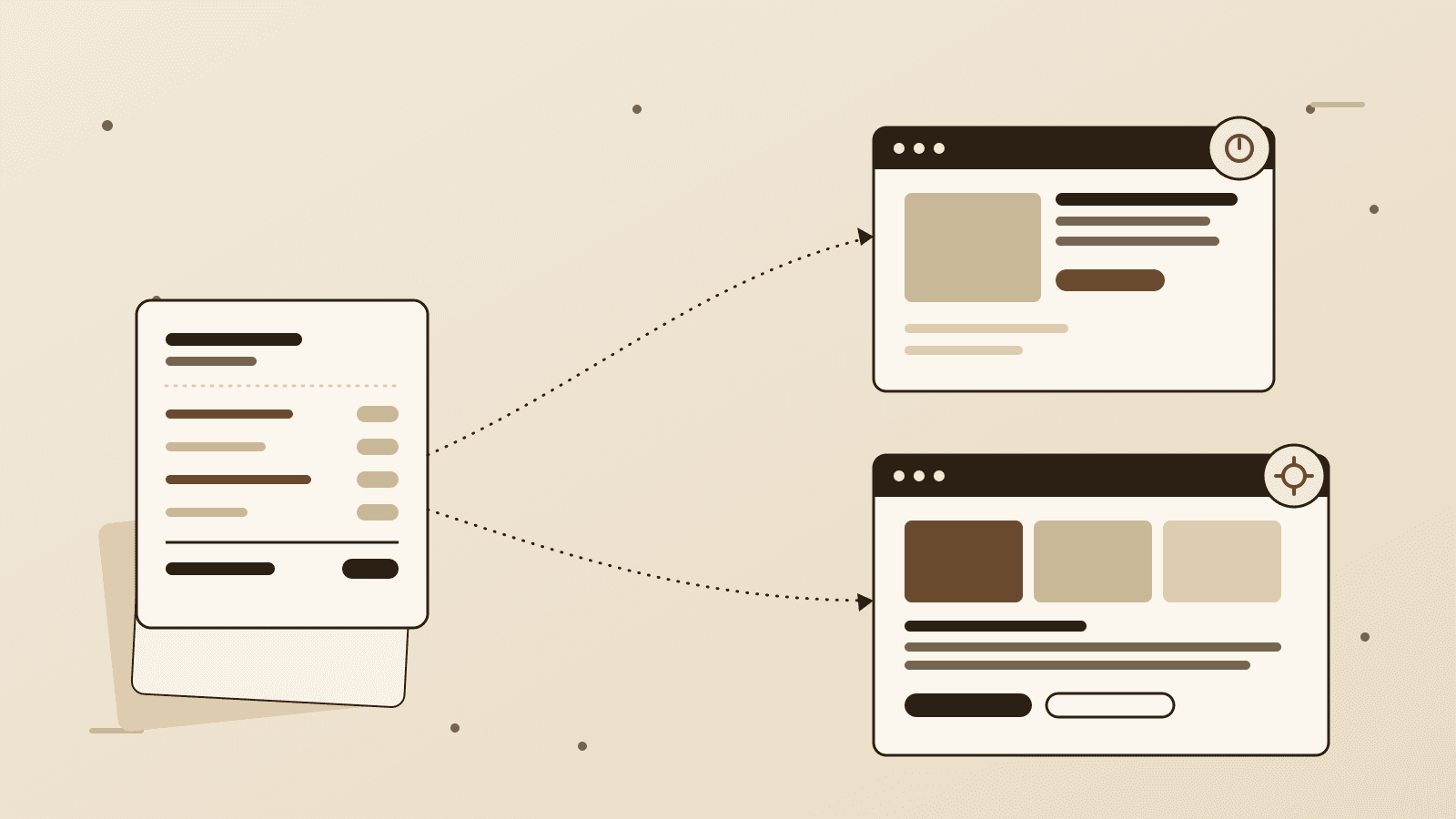
Ask five different developers what a website costs and you'll get five different numbers, sometimes by a factor of twenty. A friend built one for free on a template. A local agency quoted forty thousand dollars for what sounds like the same set of pages. Neither number is dishonest, exactly. They're just answers to different questions that happened to get asked in the same words.
"How much does a website cost" is a bit like asking how much a vehicle costs. A bicycle and a delivery truck are both vehicles, and the price difference is not a scam, it's the difference between two entirely different jobs. Most website quotes vary this wildly for the same reason: the word "website" hides enormous differences in what's actually being built.
Here's what actually moves the number, in the order it usually matters.
1. Whether you're buying a template or paying for original design and structure. A well-chosen template, filled in with your own content, can look genuinely good and costs a few hundred to a couple thousand dollars in setup time. The moment you need a layout, information architecture, or visual identity built specifically around how your business actually works, you're paying for design thinking, not just page assembly, and that cost is real and legitimate.
2. How much of the site is a brochure versus a system. A handful of pages that describe your business and let someone contact you is a fundamentally cheaper thing to build than a site with logins, a booking calendar, a payment flow, or a searchable catalog. Every one of those features is its own small piece of software with its own edge cases, and that's where a "simple website" quote quietly turns into a five-figure project.
3. Content and migration. Nobody quotes this up front, and it bites almost everyone. If you have three hundred existing blog posts, a product catalog with variants, or years of customer data that needs to move somewhere new, that work has to happen whether or not it's in the contract. Ask explicitly who is responsible for it, because "the developer" and "you" are very different prices.
4. Who's actually doing the work. A freelancer, a small studio, and a large agency can build the identical site for wildly different prices, and the difference usually isn't skill, it's overhead. A big agency's quote is paying for account managers, sales staff, and office space in addition to the actual build. That's not automatically bad, some businesses want that structure, but it's worth knowing you're paying for it.
5. What happens after launch. A cheap build with no plan for updates, security patches, or the inevitable "can we change this one thing" request usually costs more over three years than a slightly more expensive build with a real maintenance arrangement attached. Ask what a quote includes after the site goes live, not just what it includes to get there.
The honest way to sanity-check any quote is to ask for an itemized breakdown, not a single number. A vague $8,000 is impossible to evaluate. A breakdown that says $1,200 for design, $3,500 for build, $800 for content migration, $500 for a contact form and booking integration, and $200 a month afterward tells you exactly what you're buying and lets you cut what you don't need. Any developer unwilling to break a quote down like that either hasn't scoped the work carefully or doesn't want you to see how the number was built.
If you want a genuinely useful number before talking to anyone, write down what the site actually needs to do, not what it should look like. Pages, forms, logins, payments, integrations, and who's supplying the content. That list, more than any hourly rate, is what determines the real cost.
This is exactly the first conversation we have with anyone asking what a site will cost: what does it actually need to do, and what's already sitting around half-solved that we shouldn't rebuild from scratch. You get an itemized number based on that, not a rounded figure pulled from a rate card, and you talk directly to the person who'd be building it, not an account manager translating between you and the developer.
Start a project