← All posts
September 19, 2026
Do You Actually Need a CRM, or Will a Spreadsheet Still Do?
Every sales tool vendor wants you to believe a spreadsheet is a liability. Sometimes it is. Here's how to tell the difference before you pay for a platform you didn't need.
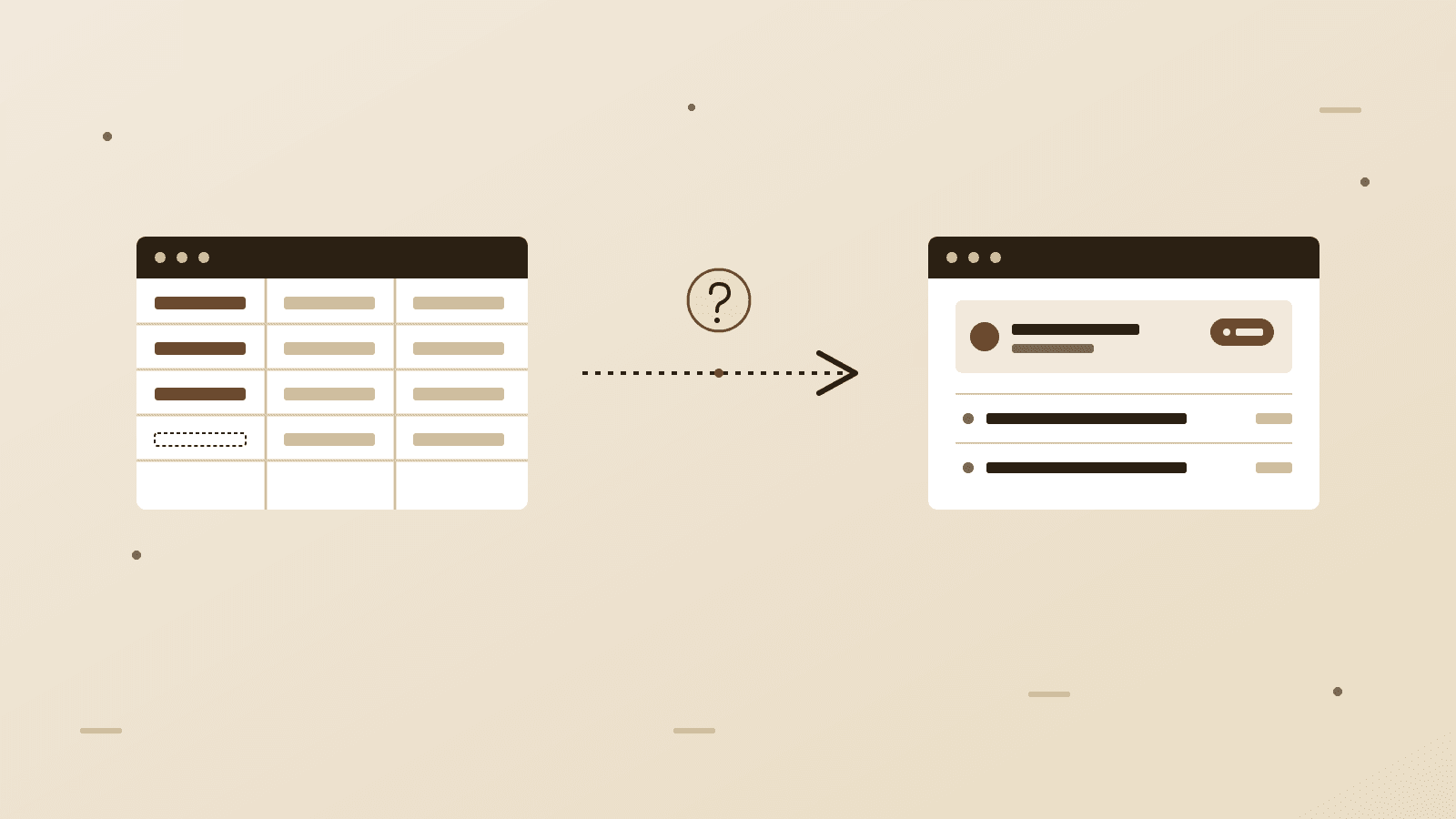
Somewhere around the third time someone asks "wait, who followed up with that customer already?", a business owner starts wondering if they need a CRM. Then they look at the pricing pages, per-seat, per-month, features locked behind three different tiers, and wonder if the spreadsheet they've been using for two years was actually fine all along.
Both reactions are reasonable, and the honest answer depends on things that have nothing to do with how sophisticated your business "should" look.
A spreadsheet is genuinely fine when one or two people touch customer information, the sales or service process fits in a handful of columns, and nobody needs to see the same record update in real time while someone else is looking at it. Contact name, last contact date, status, next step. That's not a system you need software for. That's a table, and a table is what spreadsheets are for.
The friction shows up in specific, checkable places, not vague feelings that things should be more organized.
1. Two people edit the same file and one of them overwrites the other's update, and nobody notices until a customer complains about a missed callback. That's not a training problem. Spreadsheets aren't built for simultaneous editing outside of narrow tooling like Google Sheets, and even that gets messy past a few people making real changes at once.
2. Follow-ups depend on someone remembering to look. A spreadsheet doesn't remind anyone of anything. If "call back in three days" lives in a cell instead of a task with a due date and an owner, it depends entirely on someone opening that file at the right moment, and eventually someone won't.
3. You need to know what happened with a customer across channels, a call, an email thread, a support ticket, and none of it lives in one place. A spreadsheet holds facts. It doesn't hold a timeline, and reconstructing one by hand from memory and inbox search is exactly the kind of work a CRM exists to eliminate.
4. The business has grown past the point where any one person holds the whole picture in their head. A spreadsheet is really a stand-in for institutional memory. It works because someone who knows every customer also knows what the columns mean and catches the mistakes. Once there are five salespeople instead of one, that safety net is gone, and the sheet just quietly accumulates errors nobody's positioned to catch.
If none of that is happening, a CRM will mostly cost you a monthly fee and a login nobody wants to remember. That's a real cost, not a hypothetical one, and "everyone else has one" isn't a reason to take it on.
If it is happening, the fix usually isn't the biggest CRM on the market. Most small businesses that outgrow a spreadsheet don't need a platform built for enterprise sales teams. They need something that does four things well: stores contacts, tracks a pipeline or a status, reminds someone about the next step, and lets more than one person look at the same record without stepping on each other. That's a much smaller, cheaper, and faster-to-adopt tool than what most vendors will try to sell first. In a lot of cases it's something that can be built or configured to fit exactly how the business already works, instead of forcing the business to reorganize itself around somebody else's idea of a sales pipeline.
There's a middle option worth naming too. A lightweight internal tool that looks and feels like a spreadsheet but actually enforces structure, no accidental overwrites, built-in reminders, one shared source of truth, without the cost or bloat of a full CRM platform. For a lot of small teams that's the real answer. Not "spreadsheet" or "CRM," but something built to fit the actual size of the problem.
The way to figure out which one you are is to write down, specifically, what goes wrong right now. Not "we should be more organized," but the actual incident: a lead that fell through, a customer who got called twice by two different people, a follow-up that never happened. If you can't point to a specific failure from the last few months, you probably don't need new software yet. If you can point to three, that's your answer.
That's the conversation worth having before buying anything: what's actually breaking, not what a sales page says you're missing. We'd rather spend twenty minutes figuring out if a spreadsheet with better structure solves it than sell a platform migration nobody needed, and you'd be talking directly to the person who'd actually build it, not someone reading from a features list.
Start a project